A Brief History and a World of Difference
28,000 BCE
Archaeologists have discovered carved stone objects believed to be among the oldest known pleasure devices ever found.
3000 BCE
Ancient Egypt
Artwork and writings suggest that sexuality, fertility, and pleasure played important roles in Egyptian culture and mythology.
476 CE – 1400s
The Middle Ages
Attitudes towards sex and pleasure became more restricted across much of Europe, influenced by religious teachings.
1970s
The modern sex-positive movement helped bring conversations about pleasure and sexual wellbeing into the mainstream.
500 BCE
Ancient Greece
Greek literature contains references to personal pleasure devices, demonstrating an open discussion of intimacy and pleasure.
1500s–1700s
The Renaissance
Art and literature once again began exploring themes of romance, desire, and human intimacy.
1883
Electric Innovation
Mortimer Granville developed one of the first portable electromechanical vibrators.
1998
Pop Culture Moment
The TV show Sex and the City helped introduce discussions about sex toys to a wider audience.
2100 BCE
The Roman Empire - Romans embraced luxury and pleasure, with evidence of intimate objects made from leather, wood, and metal.
1920s
Household Advertising
Vibrators appeared in women's magazines and mail-order catalogues alongside other household appliances.
2020s
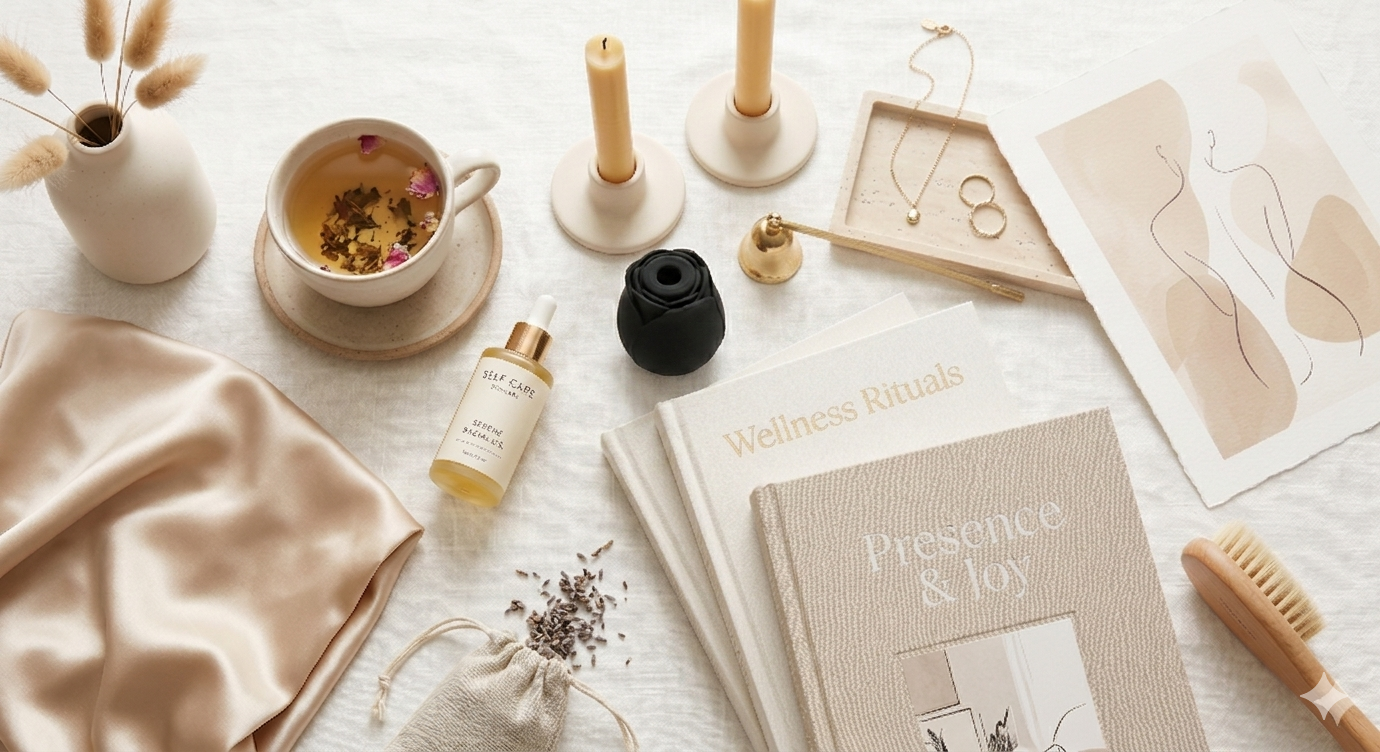
Sexual wellness became increasingly recognised as part of overall wellbeing, alongside sleep, fitness, and self-care.
2010s
App-Controlled Intimacy
Technology transformed the industry with rechargeable, app-connected, and long-distance products.
2026
The Lustéra Era
A new generation of brands is helping to make conversations around intimacy, connection, and pleasure more elegant, inclusive, and empowering.